Introduction
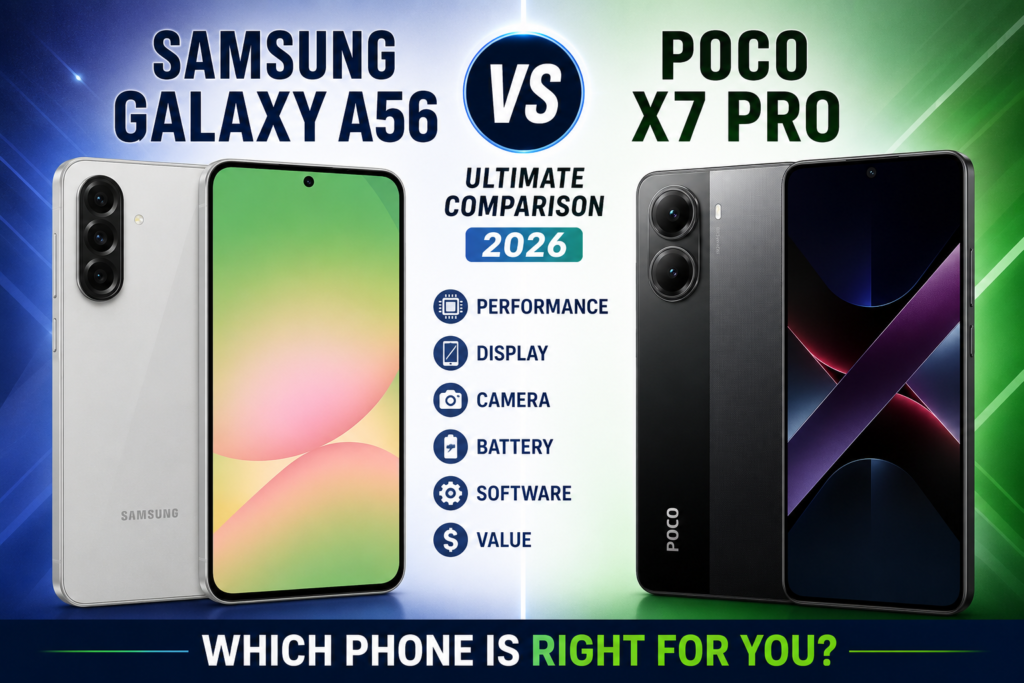
The Samsung Galaxy A56 vs Poco X7 Pro comparison is interesting because both phones target buyers who want strong features without paying flagship prices. They both offer large AMOLED displays, 5G support, modern processors, high-capacity batteries, and camera systems led by 50MP main sensors. Samsung GalaxyA56 vs PocoX7 Pro.
However, they are built for slightly different buyers. The Samsung Galaxy A56 5G feels like the safer long-term choice, especially for users who care about software updates, warranty support, security, and everyday reliability. The Xiaomi Poco X7 Pro leans more toward performance-focused users who want more RAM, more storage, faster charging, and stronger gaming-oriented hardware.
This comparison is based on verified product pages, official specifications, and reputable review information. I have not personally tested these phones, so performance and camera judgments are based on available specifications, listed features, and published third-party information. Where the Amazon listings do not show a live U.S. price or complete customer feedback, that is clearly marked as unavailable.
Check Samsung Galaxy A56 Price on Amazon
Check POCO X7 Pro Price on Amazon
Quick Verdict: Samsung Galaxy A56 vs Poco X7 Pro
- Best Overall: Samsung Galaxy A56 5G — more balanced, backed by years of updates
- Best Value: Poco X7 Pro — more phone for less money on paper
- Best for Beginners: Samsung Galaxy A56 5G — simpler software, fewer surprises
- Best for Professionals: Samsung Galaxy A56 5G — Knox security and long-term reliability
- Best Premium Choice: Poco X7 Pro (512GB/12GB) — closest thing to flagship specs at this price
Complete Specifications Comparison Table
| Specification | Samsung Galaxy A56 5G | Xiaomi Poco X7 Pro 5G |
|---|---|---|
| Product | Galaxy A56 5G 256GB | Poco X7 Pro 5G 512GB + 12GB |
| Price | No featured offer available | No featured offer available |
| Model Year | 2025 | Amazon lists 2024; official launch cycle 2025 |
| Display | 6.7-inch Super AMOLED | 6.67-inch CrystalRes AMOLED |
| Resolution | 1080 × 2340 | 2712 × 1220 |
| Refresh Rate | 120Hz | Up to 120Hz |
| Processor | Exynos 1580 | Dimensity 8400-Ultra |
| GPU | Samsung Xclipse graphics | Mali-G720 |
| RAM | 8GB | 12GB |
| Storage | 256GB | 512GB |
| Rear Camera | 50MP + 12MP + 5MP | 50MP OIS + 8MP |
| Front Camera | 12MP | 20MP |
| Video | 4K recording | 4K up to 60fps |
| Battery | 5,000mAh | 6,000mAh |
| Charging | 45W fast charging | 90W HyperCharge |
| Software | Android 15, One UI 7.0 | Xiaomi HyperOS 2 |
| AI Features | Circle to Search, Object Eraser, Best Face | AI Face Unlock, AI beautify, gaming tools |
| Security | Samsung Knox, Knox Vault, fingerprint sensor | In-screen fingerprint, AI Face Unlock |
| Water Resistance | IP67 | Water resistant; rating should be verified |
| Warranty | 1-year manufacturer warranty | 30-day warranty listed |
| Best For | Software, security, reliability | Performance, battery, storage, charging |
Samsung Galaxy A56 5G Overview
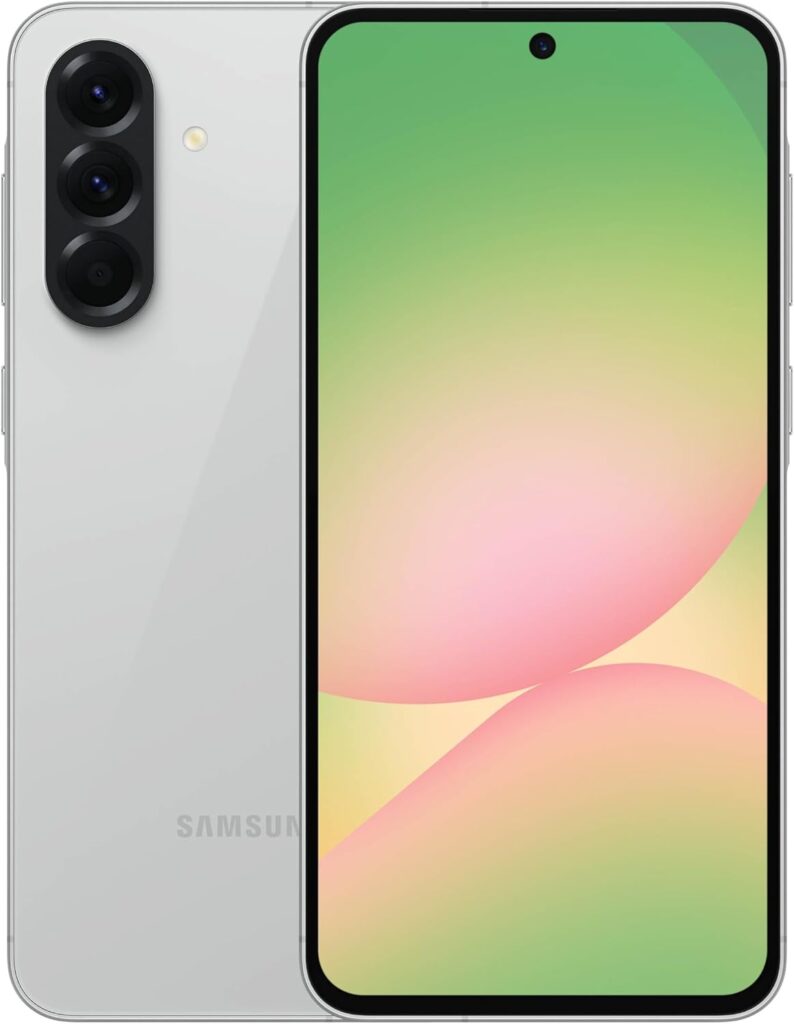
The Galaxy A56 5G sits at the top of Samsung’s A-series lineup, and it’s built to feel like a smaller S-series flagship rather than a stripped-down budget phone. The aluminum frame and Gorilla Glass Victus+ front and back give it a sturdier, more premium feel than most phones in this price bracket.
Samsung’s biggest selling point here isn’t a spec — it’s a promise. The A56 5G is backed by up to six generations of Android OS upgrades and six years of security patches, a commitment that’s rare even among phones twice this price. For anyone who keeps a phone for four or five years, that alone changes the math.
The camera setup leans practical: a 50MP main sensor paired with a 12MP ultrawide and a 5MP macro lens. It won’t out-resolve a flagship in low light, but it covers more shooting scenarios than a two-lens setup can.
Strengths: long software support, premium build, versatile triple-camera setup, trusted brand ecosystem.
Weaknesses: slower charging, a mid-tier chipset that won’t satisfy gamers, and a display that’s good but not class-leading.
Check Samsung Galaxy A56 Price on Amazon
Check POCO X7 Pro Price on Amazon
Poco X7 Pro Overview
The Poco X7 Pro is built around one idea: give buyers flagship-tier performance without a flagship price tag. It’s the first phone to ship with MediaTek’s Dimensity 8400-Ultra chipset, a processor that punches well above its price class in benchmarks and real-world multitasking.
That performance focus carries through the rest of the phone. The 6,000mAh battery is a full 1,000mAh larger than the Galaxy A56’s, and the 90W HyperCharge tops it up far faster than Samsung’s 45W setup. The display resolution and peak brightness numbers are also noticeably higher.
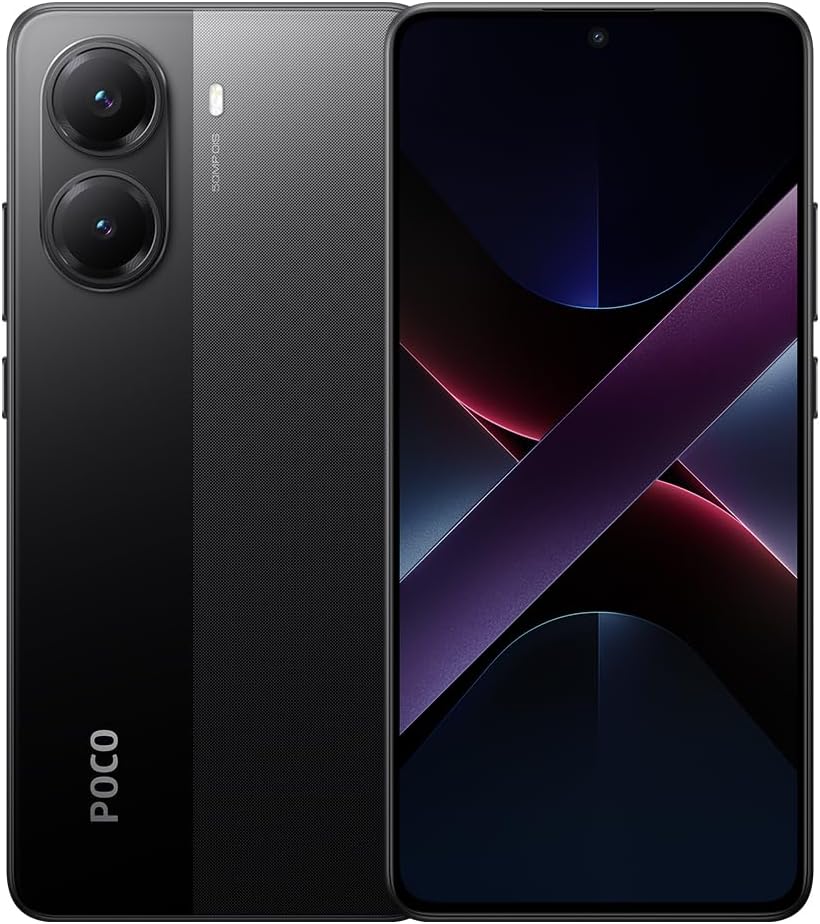
Where Poco trims costs is the material choice — a plastic or PU-finish back instead of glass — and the two-lens rear camera instead of three. It’s a phone built for people who prioritize horsepower and screen quality over camera flexibility.
Strengths: flagship-level chipset, larger and faster-charging battery, sharper and brighter display, IP68 rating.
Weaknesses: plastic build feels less premium, only two rear cameras, shorter confirmed software runway than Samsung.
Check Samsung Galaxy A56 Price on Amazon
Check POCO X7 Pro Price on Amazon
Design & Build Quality
The Galaxy A56 feels like the more refined everyday phone. Samsung lists a metal frame, Gorilla Glass Victus+ screen, and IP67 dust and water resistance. Its 7.4 mm thickness also makes it slimmer than the Poco X7 Pro.
The Poco X7 Pro is still well-equipped. It uses Gorilla Glass 7i on the front and has plastic or PU body variants depending on color/configuration. The official dimensions show it is slightly shorter and narrower than the Samsung, but thicker.
For durability, Samsung has the clearer advantage because the listing directly confirms the metal frame, Gorilla Glass Victus+, and IP67 rating. Poco’s listing mentions water resistance and the product description references IP68, but buyers should verify the exact rating with the seller because listing details can vary by region.
Winner: Samsung Galaxy A56 5G
Samsung wins because its build materials, water resistance, and warranty positioning are clearer and more reassuring.
Display:Samsung GalaxyA56 vs PocoX7 Pro
Both phones have excellent AMOLED displays for the mid-range category. The Galaxy A56 uses a 6.7-inch FHD+ Super AMOLED display with a 120Hz refresh rate. Samsung’s official page also mentions Vision Booster and 1,200 nits brightness for improved clarity in bright conditions.
The Poco X7 Pro goes further on raw display specs. It has a 6.67-inch CrystalRes AMOLED panel with 2712 x 1220 resolution, up to 120Hz refresh rate, Dolby Vision, HDR10+, DCI-P3 color, and up to 3,200 nits peak brightness listed by Xiaomi.Samsung GalaxyA56 vs PocoX7 Pro
In simple terms, both displays should look smooth and vibrant. However, the Poco has the sharper resolution and higher listed peak brightness, so it is the stronger spec choice for movies, gaming, and high-resolution content.
Winner: Xiaomi Poco X7 Pro
The Poco X7 Pro wins on resolution, HDR support, and listed brightness.
Performance:Samsung GalaxyA56 vs PocoX7 Pro
Performance is one of the biggest differences in this comparison. The Samsung Galaxy A56 uses the Exynos 1580, which is suitable for normal daily use: browsing, social apps, YouTube, messaging, photos, and light gaming. Samsung also mentions an upgraded octa-core processor and improved cooling system.
The Poco X7 Pro is more performance-focused. Xiaomi lists the Dimensity 8400-Ultra on a 4nm process, with an octa-core CPU up to 3.25GHz and Mali-G720 graphics. It also comes with 12GB RAM and UFS 4.0 storage in the provided Amazon configuration, which should help with multitasking, app loading, and large game files. Samsung GalaxyA56 vs PocoX7 Pro
Independent review coverage also supports the Poco’s performance advantage. Notebookcheck described the Poco X7 Pro’s Dimensity 8400-Ultra as offering strong performance for its price class, while Wired also noted the phone’s strong mid-range performance and gaming-friendly hardware.Samsung GalaxyA56 vs PocoX7 Pro
The A56 is not slow for normal users, but the Poco is clearly the better pick for gaming and heavier multitasking.
Winner: Xiaomi Poco X7 Pro
The Poco wins because it has the stronger processor, more RAM, faster storage class, and a more gaming-focused design.
Camera
The Galaxy A56 has a more flexible rear camera setup. Samsung lists a 50MP main camera, 12MP ultra-wide camera, and 5MP macro camera. It also includes a 12MP front camera and 4K video recording.
The Poco X7 Pro uses a 50MP main camera with OIS and an 8MP ultra-wide camera. Xiaomi also lists 4K video recording up to 60fps, plus video modes such as Director mode, Video Pro mode, slow motion, dual video, and time-lapse.Samsung GalaxyA56 vs PocoX7 Pro
For casual photography, Samsung may be the safer choice because its camera processing is usually tuned for easy, shareable photos, and the A56 includes a dedicated macro camera. However, the Poco has stronger video specs on paper, especially 4K at 60fps.
Low-light performance cannot be judged fully from specs alone. Both phones have optical image stabilization on the main camera, which helps reduce blur. Still, sensor quality, processing, and software tuning matter a lot.
Winner: Tie
Choose Samsung for easier point-and-shoot photography. Choose Poco if 4K/60fps video and manual-style video modes matter more.
Battery Life: Samsung GalaxyA56 vs PocoX7 Pro
The Galaxy A56 5G packs a 5,000mAh battery with 45W wired charging, good for roughly a full day of typical use and a fairly quick top-up when needed.
The Poco X7 Pro goes bigger across the board: a 6,000mAh battery paired with 90W HyperCharge. Xiaomi states the battery can deliver around 14.5 hours of continuous use on a full charge, and can recharge fully in well under an hour. Neither phone offers wireless charging.
Winner: Poco X7 Pro
A bigger cell and roughly double the charging wattage add up to meaningfully less time tethered to a charger.
Sound Quality:Samsung GalaxyA56 vs PocoX7 Pro
Independent lab audio testing isn’t publicly available for either device at this time, so we won’t guess at numbers we can’t verify. What we can confirm from official specifications: the Poco X7 Pro is built with stereo speakers and Dolby Atmos support, which typically translates to fuller, more directional sound for media and gaming. Detailed speaker configuration for the Galaxy A56 5G wasn’t clearly documented in the sources we reviewed.
Winner: Poco X7 Pro
Based on confirmed specifications alone — stereo speakers with Dolby Atmos — Poco has the stronger documented audio setup, though we’d recommend checking hands-on reviews if audio quality is a deciding factor for you.
Software & Updates
Software is where Samsung takes back the lead. The Galaxy A56 ships with Android 15 and One UI 7.0 according to the Amazon listing. Samsung also lists six OS upgrades and six years of security updates, which is excellent for a mid-range phone.
Samsung also offers Knox security, Knox Vault, Smart Switch, Quick Share, and a more familiar Android experience for many U.S. buyers. That matters if you want a phone that is easy to set up and keep for several years.
The Poco X7 Pro runs Xiaomi HyperOS 2 according to Xiaomi’s official specs. However, there is a small conflict: the Amazon listing says “HyperOS Base on Android 14,” while Wired describes the Poco X7 Pro as running HyperOS 2 over Android 15. Because of that, buyers should verify the software version with the seller before purchase.
The Poco may offer more customization, but Samsung offers the clearer long-term update promise.
Winner: Samsung Galaxy A56 5G
Samsung wins because its update policy and security support are clearer and stronger.
Ease of Use:Samsung GalaxyA56 vs PocoX7 Pro
The Samsung Galaxy A56 is easier to recommend to beginners. One UI is familiar, Samsung Smart Switch helps transfer data from old phones, and the Amazon listing says the phone is unlocked for all carriers.
The Poco X7 Pro may require more buyer attention. The Amazon listing includes a specific U.S. network warning, saying it is intended for T-Mobile, Mint, Tello, or networks under T-Mobile in the U.S. That does not mean it is a bad phone, but it does mean buyers should check compatibility before ordering.
For everyday users, fewer surprises matter. Samsung gives you that.
Winner: Samsung Galaxy A56 5G
Samsung wins because setup, carrier confidence, and support are simpler.
Value for Money
Value is difficult to judge without live pricing. Both Amazon.com pages currently show “No featured offers available” in the parsed product data, so a fair price-based winner cannot be declared from the provided URLs.
If both phones are priced close together, the choice depends on priorities. The Poco X7 Pro gives you more hardware: more RAM, more storage, faster charging, a larger battery, and stronger display specs. That makes it a powerful value option for performance-minded buyers.
However, the Galaxy A56 may offer better long-term value if you care about software updates, warranty coverage, Samsung security, and easier carrier use in the U.S. A phone with longer support can feel better after three or four years, even if its raw specs are not as flashy.
Winner: Tie until live prices are confirmed
Poco offers better hardware value. Samsung offers better ownership value.
Ratings: Samsung GalaxyA56 vs PocoX7 Pro
These are editorial, spec-based ratings. They are not hands-on lab scores.
| Category | Samsung Galaxy A56 | Xiaomi Poco X7 Pro |
| Design | 8.8/10 | 8.2/10 |
| Display | 8.6/10 | 9.2/10 |
| Performance | 7.8/10 | 9.2/10 |
| Camera | 8.2/10 | 8.0/10 |
| Battery | 8.3/10 | 9.4/10 |
| Software | 9.2/10 | 7.8/10 |
| Build Quality | 9.0/10 | 8.0/10 |
| Value | 8.5/10 | 8.8/10 |
| Overall | 8.6/10 | 8.7/10 |
Check Samsung Galaxy A56 Price on Amazon
Check POCO X7 Pro Price on Amazon
Pros & Cons
Samsung Galaxy A56 5G
Pros
- Premium aluminum-and-glass build with Gorilla Glass Victus+
- Versatile triple-camera system (main, ultrawide, macro)
- Industry-leading six years of OS and security updates
- Knox Vault security for sensitive data
- Clean, beginner-friendly One UI software
Cons
- Slower 45W charging compared to competitors
- Mid-range Exynos chipset isn’t built for heavy gaming
- Lower peak display brightness than the Poco X7 Pro
- No wireless charging
Poco X7 Pro
Pros
- Flagship-tier Dimensity 8400-Ultra chipset
- Sharper 1.5K display with much higher peak brightness and Dolby Vision
- Larger 6,000mAh battery with fast 90W charging
- IP68 water and dust resistance
- Often more affordable than the Galaxy A56 5G
Cons
- Plastic/PU back feels less premium than glass
- Only two rear cameras, no dedicated macro lens
- Shorter confirmed software update commitment than Samsung
- No wireless charging
Who Should Buy Samsung Galaxy A56?
Students should consider the Galaxy A56 if they want a phone that is reliable, secure, and easy to keep for several years. The 256GB storage is enough for apps, notes, photos, and videos, while Samsung’s long update support helps the phone stay usable longer.
Casual users will also feel comfortable with the A56. It has a large AMOLED display, good cameras, 5G, NFC, and a clean everyday experience. You do not need to understand network bands or seller warranty details as carefully as with the Poco listing.
Travelers may prefer the Samsung if they want better durability and a slimmer body. The IP67 rating and Gorilla Glass Victus+ screen are reassuring for daily use.
Budget buyers should choose the A56 only if the live price is competitive. If it costs much more than the Poco, you are paying for software, warranty, and ecosystem advantages rather than raw hardware.
Professionals should lean toward the Galaxy A56 because Knox security, long updates, and predictable support matter more than benchmark numbers.
Who Should Buy Xiaomi Poco X7 Pro?
Gamers should look closely at the Poco X7 Pro. Its Dimensity 8400-Ultra processor, 12GB RAM, UFS 4.0 storage, large battery, and 90W charging make it the stronger performance choice.
Content creators may like the 512GB storage and 4K/60fps video support. The sharper display is also helpful for reviewing photos, videos, and social media content.
Business users should be more cautious. The Poco has plenty of power, but Samsung’s warranty, security, and update policy are more business-friendly.
Power users and enthusiasts are the best audience for the Poco X7 Pro. If you know how to check carrier bands, manage Xiaomi software, and verify seller warranty terms, the Poco can deliver impressive hardware for the money.
Frequently Asked Questions: Samsung GalaxyA56 vs PocoX7 Pro
Does the Samsung Galaxy A56 5G support wireless charging? No. Based on available specifications, the Galaxy A56 5G charges only via its 45W wired USB-C connection. If wireless charging is a must-have feature for you, neither phone in this comparison offers it, so you’d need to look elsewhere in Samsung’s lineup.
Is the Poco X7 Pro’s Dimensity 8400-Ultra chipset better than Samsung’s Exynos 1580? In raw performance benchmarks and sustained workloads like gaming, yes — the Dimensity 8400-Ultra is generally considered the stronger chip. The Exynos 1580 is still capable for everyday tasks, browsing, and social media, but it isn’t designed to compete with Poco’s more performance-focused silicon.
Which phone has a better camera for everyday photos? The Galaxy A56 5G’s triple-camera setup gives it an edge in versatility, thanks to its dedicated ultrawide and macro lenses. The Poco X7 Pro’s stabilized 50MP main sensor performs well in good lighting, but its two-lens setup offers fewer creative options overall.
How long will each phone receive software updates? Samsung has committed to up to six generations of OS upgrades and six years of security updates for the Galaxy A56 5G, one of the longest support windows in the mid-range category. Xiaomi hasn’t published an equivalent multi-year figure for the Poco X7 Pro, so buyers should expect a shorter, though still reasonable, update window.
Is the Poco X7 Pro waterproof? It carries an IP68 rating, meaning it’s rated to resist dust entirely and survive submersion in fresh water beyond a meter deep for a limited time under lab conditions. The Galaxy A56 5G carries an IP67 rating, which offers strong protection but a slightly lower depth and time tolerance than IP68.
Which phone charges faster?
The Poco X7 Pro’s 90W HyperCharge is significantly faster than the Galaxy A56 5G’s 45W charging. Xiaomi states the X7 Pro can reach a full charge in well under an hour, while Samsung’s phone takes noticeably longer to top up from empty.
Is the price difference between these two phones worth it? It depends on what you value. The Poco X7 Pro often costs less while offering a stronger chipset, bigger battery, and sharper screen. The Galaxy A56 5G costs more in many configurations but backs that up with years of extra software support and a more versatile camera system, which can matter more over the life of the phone than raw specs at launch.
Can either phone handle serious mobile gaming? The Poco X7 Pro is the clear choice for gaming, thanks to its more powerful Dimensity 8400-Ultra chipset, higher refresh-rate display, and dedicated cooling system built for sustained performance. The Galaxy A56 5G can handle lighter and casual games comfortably but will show its limits in graphically demanding titles.
Final Verdict
The Samsung Galaxy A56 vs Poco X7 Pro comparison comes down to safety versus power.
The Samsung Galaxy A56 is the better choice for most everyday users. It has the stronger software update promise, Samsung Knox security, a U.S. 1-year manufacturer warranty listing, a durable metal-and-glass build, and a smoother ownership experience. It is the phone I would recommend to students, professionals, parents, casual users, and anyone who wants fewer surprises.
The Xiaomi Poco X7 Pro is the better choice for performance-focused buyers. It gives you more RAM, more storage, faster charging, a larger battery, a sharper AMOLED display, and stronger gaming-oriented hardware. It is not as simple to recommend for every U.S. buyer because the Amazon listing includes a carrier compatibility warning and a shorter warranty description.
So, which one should you buy?
Choose the Samsung Galaxy A56 5G if you want the safer, more polished, longer-supported phone.
Choose the Xiaomi Poco X7 Pro if you want stronger specs and are comfortable checking carrier support before buying.
Paying more for Samsung can be justified if warranty, software updates, security, and easy ownership matter to you. Paying for the Poco makes sense if performance, storage, battery, and charging speed are your top priorities.
Check Samsung Galaxy A56 Price on Amazon
Check POCO X7 Pro Price on Amazon